Ergonomic Furniture Guidelines for Hotel Guest Room Design
Ergonomic Furniture Guidelines for Hotel Guest Room Design
Hotel guest rooms are expected to provide more than a comfortable bed. Modern travelers may work remotely, use laptops, eat meals, read, relax, and store personal belongings within the same room. As a result, ergonomic furniture for hotel guest rooms has become an important consideration for interior designers, hotel developers, architects, and FF&E procurement teams.
Ergonomic hotel furniture should balance comfort, functionality, durability, space efficiency, and visual design. The objective is not simply to make individual furniture pieces comfortable, but to create a guest room where furniture works together naturally and supports different activities.
1. Start with the Guest Room Layout
Ergonomics begins with the overall room layout. A comfortable chair cannot compensate for a desk positioned in an inconvenient location or insufficient circulation around the bed.
Furniture should be arranged to provide practical movement paths between the entrance, bed, bathroom, wardrobe, desk, and seating area. Designers should consider door swings, luggage placement, cleaning access, electrical outlets, and the position of televisions and lighting.
Compact furniture can be particularly useful in limited-size guestrooms. A wall-mounted desk, slim nightstand, compact lounge chair, or two-seat sofa can provide functionality while preserving circulation space.
2. Choose an Ergonomic Hotel Desk and Task Chair
Many hotel guests use the desk for laptops, business work, studying, or personal administration. A properly proportioned hotel desk and ergonomic task chair can make this area significantly more functional.
The chair should provide a supportive backrest, comfortable seat height, stable base, and appropriate seat depth. Depending on the hotel concept, adjustable lumbar support, armrests, tilt mechanisms, and casters may be specified.
The desk should provide sufficient leg clearance and working surface while positioning the user comfortably in relation to the chair. Electrical and USB charging points should be conveniently accessible without creating cable-management problems.
3. Select Supportive Hotel Beds and Headboards
The bed is the dominant piece of guestroom furniture and should be considered from both comfort and practical perspectives. The bed height should allow guests to sit down and stand up comfortably.
An upholstered headboard can provide a comfortable surface for guests who like to sit up in bed to read or use electronic devices. Integrated reading lights, switches, USB charging, and bedside controls can further improve usability.
For hotel FF&E packages, the headboard can be coordinated with nightstands, lighting, wall panels, and other casegoods to create a unified guestroom design.
4. Use Ergonomic Lounge Seating
Guestrooms increasingly include lounge chairs, ottomans, loveseats, or small sofas. These pieces can create a separate relaxation zone away from the bed and desk.
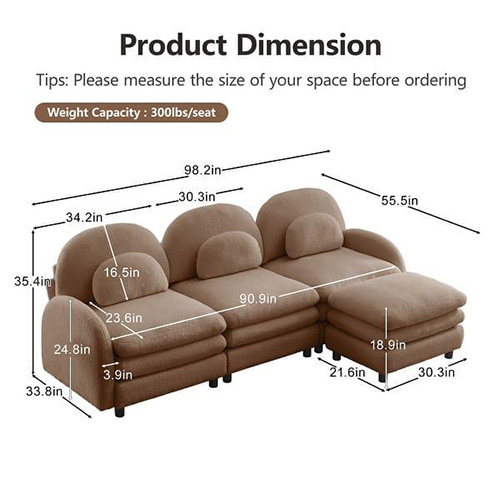
An ergonomic lounge chair should provide appropriate seat depth, supportive back geometry, comfortable arm height, and stable construction. A small hotel loveseat sofa can be useful in suites or larger guestrooms where additional seating is required.
For compact rooms, designers should avoid excessively deep furniture that reduces circulation. Custom dimensions can help furniture fit the room without sacrificing seating comfort.
5. Consider Nightstand Accessibility
Hotel nightstands should place essential items within easy reach from the bed. Guests may need access to lighting controls, charging outlets, phones, water, personal belongings, and room information.
Floating nightstands can create a visually lighter appearance and make floor cleaning easier. Freestanding nightstands provide additional storage and may be more appropriate for traditional hotel interiors.
The final design should consider both sides of the bed where applicable and coordinate the nightstand height with the mattress and bed platform.
6. Choose Practical Wardrobes and Storage
Wardrobes, closets, luggage benches, drawers, and open shelving should be easy to access without creating unnecessary bending or reaching.
A hotel wardrobe can combine hanging storage, shelves, drawers, a safe compartment, and luggage space. Pull-out luggage benches can provide a convenient surface for suitcases while keeping belongings off the floor.
Storage hardware should be durable enough for repeated hotel use. Soft-close drawer systems, robust hinges, quality handles, and replaceable components can contribute to long-term performance.
7. Pay Attention to Furniture Materials
Ergonomics should be combined with commercial durability. Hotel furniture experiences frequent use by guests with different body sizes, habits, and expectations.
Common materials include engineered wood panels, plywood, solid wood, metal, laminate, veneer, stone, glass, performance fabrics, and commercial-grade synthetic leather. Upholstery should be selected according to expected traffic and cleaning requirements.
Rounded or softened furniture edges may also be appropriate in certain guestroom designs, particularly around circulation areas.
8. Coordinate Furniture with Accessibility Requirements
Accessible guestrooms require additional consideration beyond standard ergonomic design. Furniture placement should allow appropriate maneuvering and access to essential room functions.
Design teams should review applicable accessibility requirements and local building regulations for the project's location. Furniture should not obstruct accessible routes, controls, doors, bathroom access, or other required clearances.
Accessible room furniture may require different dimensions or configurations depending on the project and applicable standards.
9. Design for Multiple Guest Activities
A modern hotel guest room can function as a bedroom, office, dining area, lounge, and personal storage space. Furniture therefore needs to support multiple activities without making the room feel crowded.
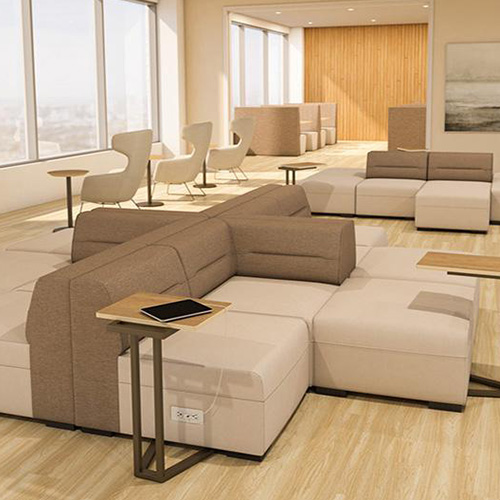
A desk can serve as a workstation and vanity. A luggage bench can function as temporary storage. An upholstered lounge chair can provide a reading area, while a modular sofa can support both relaxation and social interaction.
This multifunctional approach allows hotel designers to provide more functionality without continuously adding furniture.
10. Specify Ergonomic Furniture as a Complete FF&E Package
For hotel developers and procurement teams, ergonomic performance should be considered across the complete FF&E package rather than for individual products only.
A typical ergonomic guestroom package may include:
- Ergonomic hotel desk chair
- Writing desk or work desk
- Upholstered headboard
- Hotel nightstands
- Lounge chair
- Ottoman or footstool
- Loveseat or compact sofa
- Luggage bench
- Wardrobe and closet system
- TV cabinet or media console
- Coffee table
- Bathroom vanity
- Full-length mirror
Manufacturers and suppliers can develop these products according to room dimensions, interior design drawings, material schedules, and hotel brand requirements.
Ergonomic furniture guidelines for hotel guest room design should focus on comfort, accessibility, efficient circulation, intuitive use, durability, and coordinated aesthetics. The best guestroom furniture package allows travelers to work, sleep, relax, store belongings, and move around the room comfortably.
For hotel projects, custom manufacturing can provide additional flexibility. Furniture dimensions, upholstery, finishes, hardware, storage functions, and ergonomic features can be developed around the specific room prototype. This approach helps designers and FF&E procurement teams create guestrooms that are both visually consistent and practical for everyday hotel use.
Latest News
Contact Us

Mobile: +86-18750258798
E-mail: [email protected]
Add: Unit 6025 Minnan Town A No 350 ChangLe Huli District 361006 Xiamen Fujian Province China





 Mail inquiry