solid walnut vs walnut veneer chair difference
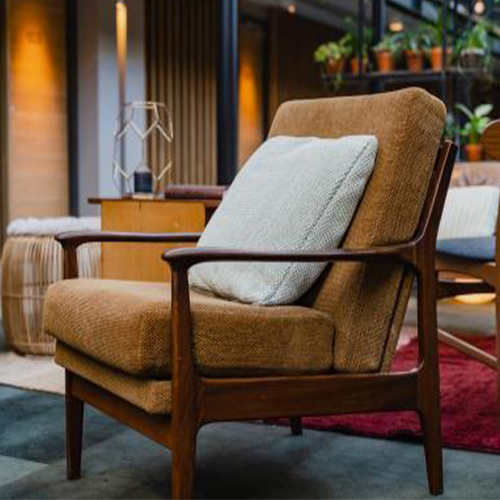
Solid Walnut vs. Walnut Veneer Chair: What Is the Difference?
When selecting walnut chairs for a hotel, restaurant, office, or residential project, one of the most important construction decisions is whether to choose solid walnut wood or walnut veneer. Both materials can create an attractive natural walnut appearance, but they differ in construction, stability, weight, cost, and customization potential. Understanding these differences helps architects, designers, procurement teams, and furniture buyers select the right chair for their project.
What Is a Solid Walnut Chair?
A solid walnut chair is manufactured from natural walnut lumber. The structural components—such as the legs, arms, back frame, rails, or other visible parts—are made from solid wood rather than a thin decorative layer.
The biggest advantage of solid walnut is its authentic natural character. Each piece of lumber has its own grain pattern, color variation, knots, and tonal differences. This makes every chair visually distinctive.
Solid walnut is also suitable for components that require machining, shaping, and edge detailing. A manufacturer can create curved arms, tapered legs, sculpted back frames, and other three-dimensional details directly from walnut lumber.
For premium hospitality furniture, solid walnut can create a high-end appearance and substantial feel. However, it is generally more expensive than veneer because more natural walnut material is required.
What Is a Walnut Veneer Chair?
A walnut veneer chair uses a thin layer of genuine walnut wood applied over a stable engineered substrate, such as plywood, MDF, or another furniture-grade panel. Importantly, real walnut veneer is genuine walnut wood, even though the main core is not solid walnut.
Veneer allows furniture manufacturers to achieve the appearance of walnut while using less solid hardwood. It is particularly useful for larger flat or curved components where dimensional stability is important.
Walnut veneer can also provide a more consistent appearance across a furniture package. Carefully selected veneer sheets can be matched so that chairs, tables, desks, cabinets, and other furniture have a coordinated grain direction and color.
Solid Walnut vs. Walnut Veneer
| Feature | Solid Walnut | Walnut Veneer |
|---|---|---|
| Construction | Natural walnut lumber | Thin walnut layer over engineered core |
| Appearance | Natural grain and variation | Real walnut appearance with controlled grain matching |
| Stability | Can expand and contract with humidity | Generally more dimensionally stable |
| Weight | Usually heavier | Often lighter |
| Material cost | Higher | More economical |
| Sculpted details | Excellent | Depends on substrate and construction |
| Large panels | More susceptible to movement | Well suited to panels |
| Repair potential | Can often be sanded/refinished repeatedly | Limited by veneer thickness |
| Hospitality use | Premium chairs and visible frames | Casegoods and engineered furniture components |
Which Is Better for Hospitality Chairs?
There is no single material that is appropriate for every project. The choice depends on the chair design, budget, durability requirements, and desired appearance.
Solid walnut is particularly suitable when the walnut frame itself is a major design feature. A mid-century armchair with exposed walnut arms and legs, for example, can benefit from the depth and authenticity of solid wood.
Walnut veneer can be advantageous when the design includes broad panels or when a project requires a controlled appearance across a large furniture package. It can also help manage material costs while maintaining a genuine walnut surface.
For hotel and restaurant projects, the best solution may be a combination of solid walnut and walnut veneer. Solid walnut can be used for structural or highly visible components such as legs, arms, and frame members, while walnut veneer can be used for larger panels.
Choosing Walnut Furniture for a Custom Project
When purchasing walnut chairs, buyers should ask the manufacturer to specify exactly which components are solid walnut and which are veneered. It is also useful to request a wood finish sample, veneer sample, construction drawing, upholstery specification, and material description before approving production.
For commercial furniture, other specifications—including frame construction, joint design, foam density, upholstery performance, load requirements, protective coating, and packaging—should also be reviewed.
Whether you choose solid walnut, walnut veneer, or a combination of both, the right construction can provide an attractive, durable chair that fits the design and performance requirements of the project.
Latest News
Contact Us

Mobile: +86-18750258798
E-mail: [email protected]
Add: Unit 6025 Minnan Town A No 350 ChangLe Huli District 361006 Xiamen Fujian Province China





 Mail inquiry